




Key Takeaways
Choosing access equipment starts with the task and the workplace, not the product catalogue. Use these points to shape a clear brief and compare suppliers on a like-for-like basis.
- Define the required working height, access route, task frequency and load.
- Select a ladder design that fits the work area, movement needs and storage constraints.
- Check model-specific specifications, applicable standards and safe-use documentation.
- Compare suppliers on product suitability, technical advice, delivery and ongoing support.
- Consider the full ownership cost, including installation, maintenance and replacement parts.
Define the requirements for your worksite
Before contacting an industrial platform ladder supplier in Australia, define the tasks the equipment needs to support and the conditions in which it will be used. List the working height, access route, task frequency and expected load, including the worker, tools and materials. A clear brief makes it easier to assess suitable options and compare quotes fairly. Consider who will use the ladder, where it will be used and how often the task occurs. Those details help distinguish a good fit from a ladder that only appears suitable on paper.
Assess working height, reach and access constraints
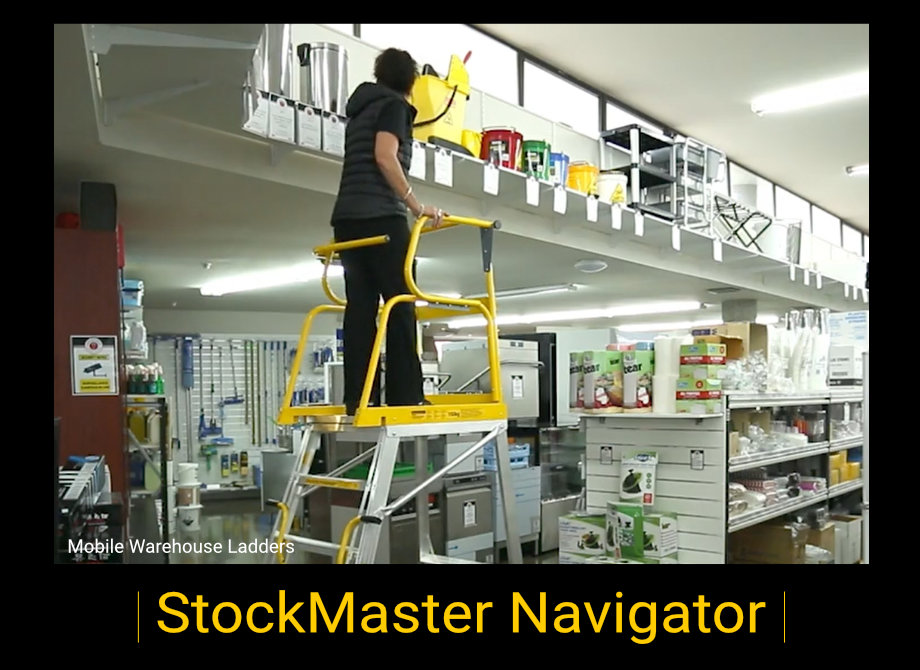
Start with the height of the task and the route workers need to take to reach it. Check overhead obstructions, shelving, machinery and doorways, as well as whether a ladder must pass through a narrow aisle or between workstations. Specify the required platform height and task reach separately; they describe different parts of the access requirement. For warehouse picking and shelf access, a StockMaster Navigator is a mobile warehouse platform ladder made for order picking, shelf stocking and inventory access.
Consider task duration and frequency of use
A short, occasional task may call for a different arrangement from repeated work across a shift. Note how long a worker typically stays at height, how often the ladder is repositioned and whether several workers will use it during the day. Frequent movement between tasks can make mobility and setup time important, while longer tasks may place greater emphasis on a suitable platform and access arrangement. Include these patterns in your brief so a supplier can discuss equipment against the work, rather than relying on a broad label such as “industrial”.
Check floor conditions, space and movement needs
Measure the available working and storage space, including turning areas and the route between task locations. Record floor conditions and any transitions, slopes or outdoor areas the equipment may need to cross. These details can narrow the choice between a stationary option and a mobile one. For workplaces where movement across varied surfaces matters, the StockMaster Tracker is designed for indoor and outdoor use and offers stable braking.
Identify the load capacity required for workers, tools and materials
Work out the total load the ladder needs to support, including the worker and any tools or materials carried onto it. Check the product’s stated load rating and specifications against that requirement; do not assume that similar-looking models have the same capacity. A practical brief also makes clear whether tools need to be carried by hand or kept close while working. This is a specification to verify against the exact model and intended use, not a detail to infer from a product photograph.
Understand ladder designs and available options
Once you understand the task, compare designs by how they support access and movement in your workplace. The terms fixed, mobile and folding describe different practical considerations, not a complete measure of suitability. Look at where the ladder will be positioned, how it will be moved and how it will be stored between uses. A supplier should be able to explain the available options in relation to your site requirements.
Compare fixed, mobile and folding platform ladders
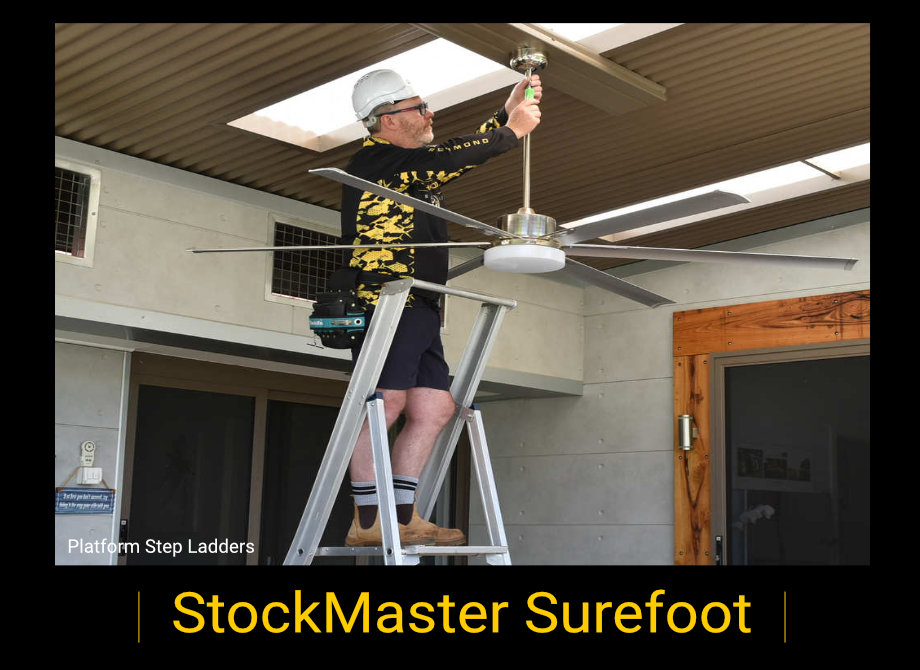
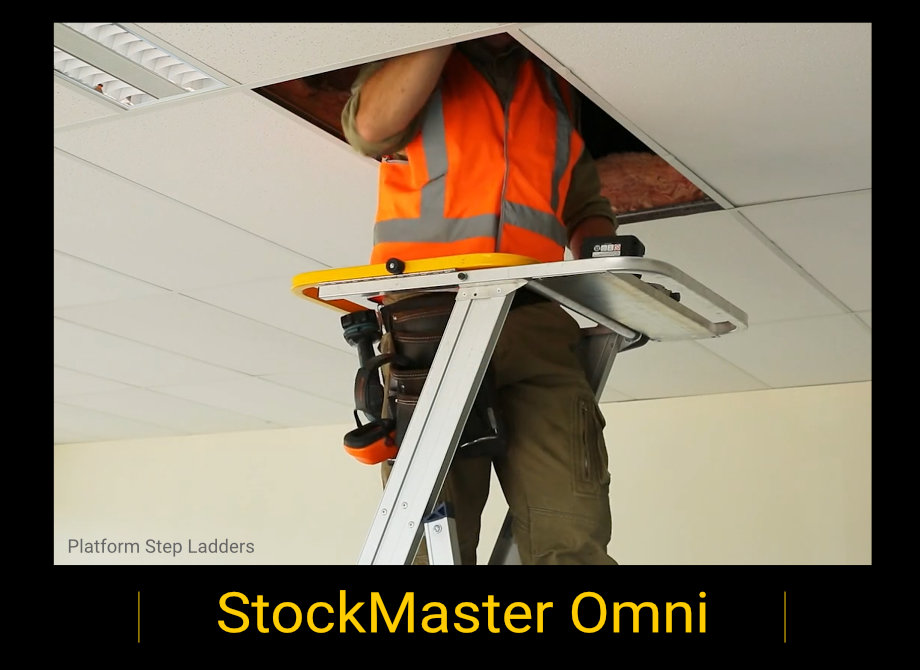
A fixed arrangement may suit a regular access point, while a mobile platform can serve locations where work moves from one area to another. Folding designs may be worth considering where transport or storage space is limited, but you should confirm the specific model’s configuration and intended use. StockMaster’s SureFoot is a portable trade platform ladder; its documented features include a non-slip aluminium platform, deep box-section steps and jumbo grip feet. Compare those details with the worksite brief rather than treating any one design as a universal choice.
Choose platform size and guardrail configuration
The platform needs to provide a usable working area for the task and the worker’s normal tools, while the overall ladder must fit the site. Ask how platform dimensions and guardrail arrangements vary between the models being considered. In particular, confirm the configuration supplied in the quote instead of assuming an accessory or rail is included. A clear specification here helps prevent a price comparison between products that are not actually equivalent.
Assess access features such as stairs, gates and handrails
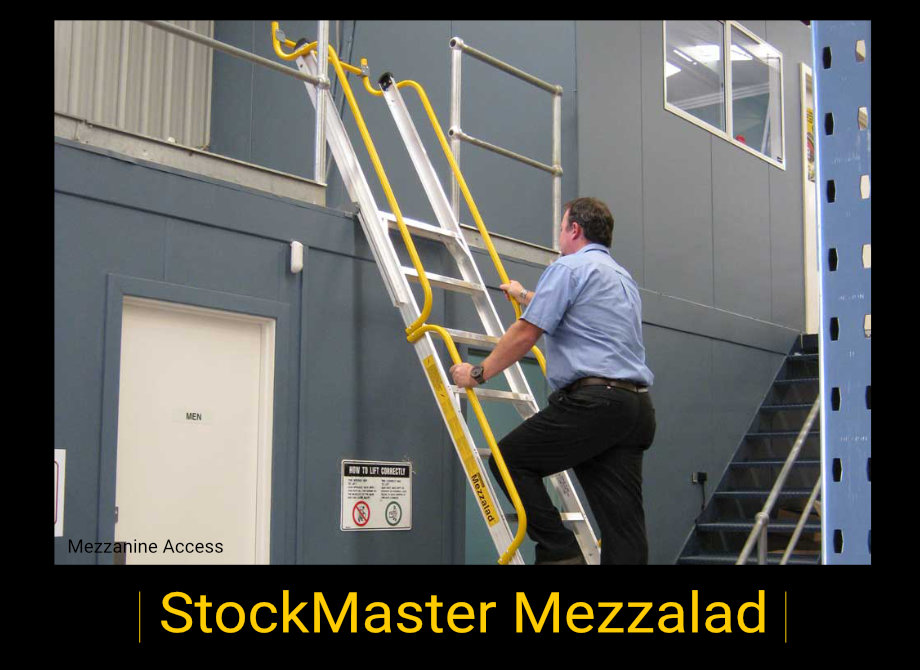
Access features affect how a worker approaches and leaves the platform, so consider them alongside the task itself. Check whether the route needs steps, a gate or handrails, and ask the supplier to identify which features are included or optional for the specific model. For example, StockMaster’s platform ladder accessories include Auto-Gates, Rota-Gates, stability legs, folding rails and Mezzalad brackets for compatible ladders. Confirm compatibility and configuration before treating an accessory as part of the proposed equipment.
Consider materials, finishes and environmental conditions
Match material and finish to the conditions where the ladder will be used and stored. Consider exposure to weather, cleaning routines and the possibility of knocks or frequent handling, then ask the supplier what the product specifications say about those conditions. Avoid assuming that a particular material or finish is suitable for every industrial environment. The right choice is the one supported by the model’s documentation and the demands of your site.
Check safety, standards and documentation
Safety information should be part of the buying decision from the first discussion, not something to check after delivery. Ask for documentation for the exact model and configuration under consideration, then read it against your worksite requirements. A product category or a supplier’s general statement cannot replace model-specific evidence. Keep the information available to the people responsible for selecting, using and inspecting the equipment.
Confirm the ladder is designed for its intended application
Describe the task and working conditions to the supplier and ask whether the proposed ladder is intended for that application. A product suited to picking in a warehouse may not be the right option for a maintenance task in another setting. Confirm how the design, access method and mobility relate to the work you have described. If the application changes, review suitability again rather than assuming the original selection still applies.
Review load ratings and product specifications
Read the load rating and other specifications against your stated requirements. Check that the model name, configuration and any selected accessories match the quote and the documents supplied. For a documented example, StockMaster’s SureFoot is rated to 150 kg and designed to meet Australian Standard AS 1892.1:2018; check the current documentation for the exact model you are considering. Keep the rating and other product details distinct from assumptions about how the ladder will be used.
Ask about applicable Australian standards and compliance evidence
Ask which Australian standards apply to the particular product and request the evidence or documentation that supports the supplier’s statement. Applicability can depend on the equipment and intended use, so do not treat a general reference to standards as confirmation for every model. Check that model identifiers and configurations in any evidence match the quoted product. If anything is unclear, ask for an explanation before making a purchasing decision.
Check inspection guidance, warnings and safe-use instructions
Ask for inspection guidance, warnings and safe-use instructions before purchase, and identify who in your organisation will review them. The documents should give your team a usable basis for understanding the product’s limits and care requirements. As part of a practical check, confirm you can locate guidance on:
-
Pre-use checks and routine inspection.
-
Safe access, positioning and use.
-
Warnings and stated limitations.
-
Care, storage and damage reporting.
Use the supplied instructions to support your workplace procedures, and clarify any point that is not covered in the documentation. A purchasing decision is stronger when the people who will manage the equipment can understand the information as well as the buyer.
Evaluate potential suppliers
A supplier should help translate your operational brief into a product comparison you can verify. Look for clear answers about intended use, specifications and available configurations rather than relying on broad assurances. It is also useful to understand how advice, distribution and after-sales contact work for your location. Those conversations reveal whether the supplier can support the practical stages of a business purchase.
Look for experience serving industrial workplaces
Ask whether the supplier understands the working conditions and access patterns relevant to your organisation. Explain your application in concrete terms, such as order picking, storage access or maintenance, and see whether the questions they ask help clarify your needs. The aim is not simply to find a supplier that sells ladders; it is to find one that can discuss the equipment in relation to the work. Keep the conversation focused on evidence and fit.
Review product range and technical support
A relevant range can make it easier to compare designs for different tasks, while technical support can help you understand specifications and configurations. Ask what product information is available and how the supplier handles questions about suitability or compatible accessories. StockMaster’s range includes platform step ladders and warehouse platform ladders, with options to compare for different workplace access needs. Assess the support you can actually access, not just the number of products in a catalogue.
Ask about Australian manufacturing and product provenance
If local manufacturing is a purchasing consideration, ask where the specific product is made and how its provenance is documented. A brand’s general location or Australian distribution does not, by itself, establish where every model is manufactured. Request a clear answer tied to the quoted product, and check that any manufacturing claim relates to that model. This makes provenance part of a verifiable comparison rather than an assumption.
Check references, service coverage and response times
Ask what service coverage is available for your site and how to contact the supplier when you need help. If references are offered, focus on whether the examples relate to a similar application and type of purchase. Confirm expected response channels and timing for questions, parts enquiries or other support needs. These practical details can matter after the initial order, particularly when equipment is used across multiple work areas.
Compare quotes and total cost of ownership
A low purchase price is difficult to interpret until you know exactly what is included. Compare quotes against a shared specification and account for costs that arise before and after delivery. Ask suppliers to state assumptions, exclusions and any optional items clearly. This gives procurement and operations teams a more useful basis for evaluating the purchase.
Match specifications before comparing prices
Make sure each quote describes the same core requirements: intended task, working height, load rating, access features and any required mobility. Check the model and configuration line by line, since similar descriptions can conceal differences in what is supplied. The comparison is more useful when each supplier has responded to the same brief. If a specification is missing, request clarification rather than filling the gap with an assumption.
Account for delivery, installation and lead times
Ask whether delivery, unloading or installation is included, and confirm expected lead times and any conditions that could affect them. Site access can influence how equipment is delivered, so share relevant restrictions before accepting a quote. Put the main comparison points into a simple table so differences are visible:
|
Quote item |
What to confirm |
Why it matters |
|---|---|---|
|
Product and configuration |
Model, platform and included features |
Confirms the quote matches your brief |
|
Delivery |
Cost, destination and unloading arrangements |
Helps identify site-related requirements |
|
Installation |
Whether it is needed and included |
Makes the supplied scope clear |
|
Lead time |
Expected timing and conditions |
Supports operational planning |
Use the table to identify questions, not to treat an unconfirmed detail as a commitment. Once the scope is clear, compare prices on an equivalent basis and record any assumptions that remain.
Consider maintenance, replacement parts and warranties
Ask what maintenance guidance and replacement parts are available for the quoted model, and request the warranty terms in writing. Confirm how to identify compatible parts and how enquiries are handled. The answers help you understand what support may be needed during the equipment’s service life, without assuming that all products have identical requirements. Include any stated conditions in your procurement records.
Weigh upfront cost against expected service life
Consider the purchase price alongside the product information, expected use and support arrangements. A more expensive quote may include a different configuration or service scope, while a lower one may exclude items your workplace needs. Avoid assigning a service life unless the supplier provides documented information for the model and conditions in question. The useful comparison is the cost of meeting your requirements over time, supported by details you can verify.
Plan delivery, implementation and ongoing support
The purchase process does not end when a quote is accepted. Plan how the equipment will reach its intended location, how workers will receive the relevant instructions and who will take responsibility for its upkeep. Confirming these details early can prevent avoidable delays and unclear ownership. Treat implementation as part of the selection, particularly when the ladder will be shared across teams or locations.
Confirm site access and delivery requirements
Check the delivery route, receiving hours and any restrictions that may affect access to the site. Tell the supplier about loading arrangements, internal routes and the final location so delivery expectations are understood. Confirm who will receive the equipment and what condition or documentation checks they should make on arrival. Clear arrangements help the workplace prepare for the equipment before it is dispatched.
Arrange familiarisation or operator training where needed
Decide who needs to understand the ladder’s use and product-specific instructions before it enters service. Ask the supplier what familiarisation or training is available, and make sure any arrangements match the model and workplace procedures. Keep the supplied instructions accessible to workers and supervisors. Where multiple teams share equipment, identify how important information will be passed on to each group.
Set inspection and maintenance responsibilities
Assign responsibility for inspections and maintenance before the equipment is put into regular use. Your process should identify who checks the equipment, how findings are recorded and where the relevant product guidance is kept. Make sure that the person responsible can access the supplier’s documentation and knows how to raise questions. A clear owner helps inspection and maintenance tasks remain part of routine workplace practice.
Establish a process for reporting damage and ordering parts
Agree how workers should report damage or concerns, and who decides what action to take before the equipment is used again. Keep the model details available so that parts or support enquiries can be specific. Make sure the process also covers how replacement parts are checked for compatibility. A straightforward reporting route supports consistent follow-up without relying on informal messages or guesswork.
Conclusion
Choosing the right industrial platform ladder supplier starts with understanding your workplace requirements, comparing documented product specifications and assessing the support available after purchase. The final decision should reflect how the ladder will be used, the evidence available for the quoted model and the supplier’s ability to support your workplace over time. Compare documented specifications, safety information, delivery arrangements and ongoing support before weighing quotes. With those details in hand, you can select a ladder and supplier based on fit for purpose rather than price alone. Need help selecting the right platform ladder for your workplace? Contact StockMaster to discuss your application, working height and access requirements. Our team can help you compare suitable access equipment and identify the product information you need to make an informed decision.
Frequently Asked Questions
What should you tell a supplier when requesting a platform ladder quote?
Describe the task, required working height, load, frequency of use, floor conditions, access route and available storage space. Include any access features or delivery constraints you already know about.
How do you work out the required load rating?
Account for the worker and the tools or materials that will be on the ladder at the same time. Compare that total requirement with the stated rating for the exact model and configuration.
What is the difference between a fixed and a mobile platform ladder?
A fixed ladder is positioned for access at a regular location, while a mobile model is intended to be moved between work areas. The right choice depends on the task, site and product specifications.
What documents should you request before buying?
Ask for the product specifications, load rating, applicable standards or compliance evidence, safe-use instructions, warnings and inspection guidance for the model being quoted.
Should you compare platform ladders by price alone?
No. First confirm that each quote covers a comparable model, configuration and delivery scope. Then consider installation, maintenance, replacement parts, warranty terms and expected use.
What should you check before arranging delivery?
Confirm site access, receiving hours, unloading arrangements and the route to the equipment’s intended location. Agree who will receive the ladder and check the supplied documentation.
Who should be responsible for inspecting a platform ladder?
Your organisation should assign a responsible person and follow the inspection guidance supplied for the specific product. Make sure findings, damage reports and maintenance actions are handled through a clear workplace process.