





Key Takeaways
Choosing industrial platform ladders in Australia requires careful consideration of the work, workplace conditions and safety requirements. The right equipment needs to provide safe, practical access while matching the working height, frequency of use and conditions of the job.
Whether you’re purchasing a platform ladder for warehouse order picking, maintenance or general workplace access, this guide explains what to consider before comparing products and suppliers.
- Match platform height and design to the task, working position and frequency of use.
- Check the floor, available space and access route before deciding whether mobility is useful.
- Compare materials, construction and safety features against the workplace environment.
- Confirm the complete working load, ladder dimensions and storage requirements.
- Ask suppliers for relevant documentation, servicing information and the full cost of ownership.
Match the ladder to the task and worksite
Start with the job rather than a preferred ladder model. Consider where you will stand, how long the work will take and what needs to be carried up. A clear picture of the worksite helps you avoid buying equipment that is awkward to position or unsuitable for the task.
Assess working height and platform height
Working height and platform height describe different things, so confirm which measurement a supplier is providing. Think about the position you need to reach and whether you can work comfortably from the platform without stretching. The right height depends on the task and the user; avoid choosing from a headline dimension alone.
A simple comparison can help you turn a work brief into questions for suppliers. Record what you need to reach and ask how each option’s platform height relates to that task.
Work requirement | What to establish | Question for the supplier |
|---|---|---|
Reaching stock | Height and position of the stock | What platform height suits this access point? |
Maintenance work | Where the hands-on task will take place | Can the user work without overreaching? |
Repeated access | How often the user will climb and reposition | Which design suits the frequency of use? |
Multiple work areas | Differences in reach and access between locations | Is one ladder suitable for each task? |
Use the answers as a starting point, then check the model’s dimensions and instructions rather than relying on a general working-height estimate. For Australian buyers comparing options, a supplier comparison guide can help structure questions about task requirements, load rating, access features and ownership costs.
Consider task duration, tools and materials
A brief reach to a high shelf is different from a longer maintenance job. Consider how long the user will be on the platform, whether the task requires both hands and what tools or materials need to be carried. A larger platform may be useful for some jobs, but it does not remove the need to stay within the ladder’s stated capacity.
Think through the whole task before choosing. The working position matters as much as the reach: a ladder that puts the user at the correct height may still be inconvenient if tools cannot be carried safely or the task involves frequent movement.
Check floor conditions and available space
Look at the surface where the ladder will be used, including its level, condition and available clearance. Check for narrow aisles, obstacles, doorways and areas where other workers or equipment pass. These details can determine whether a fixed-position ladder is practical or whether a mobile design is worth considering.
Measure the area in which the ladder must stand and the route it must travel. If it will be used in several parts of a facility, compare each location rather than assuming one clear area represents the whole site.
Account for indoor, outdoor and electrical work
The working environment affects which materials and features are appropriate. For electrical work, ask the supplier to confirm whether the particular ladder is suitable for that application; do not assume that all ladders, or all non-metallic ladders, meet your workplace’s requirements. Likewise, outdoor use calls for attention to the surface, weather exposure and how the equipment will be moved and stored.
Describe the actual conditions when requesting advice, including whether the ladder will be used indoors, outdoors or near electrical hazards. Check the product documentation and workplace procedures before making a selection.
Compare platform ladder designs
Platform ladders are not all intended for the same kind of work. A compact step ladder may suit occasional access, while a platform or mobile design may be more appropriate for repeated tasks or movement around a work area. Compare how the ladder will be accessed, positioned and secured, not just how it looks in a catalogue.
Choose between a stepladder, podium or mobile platform
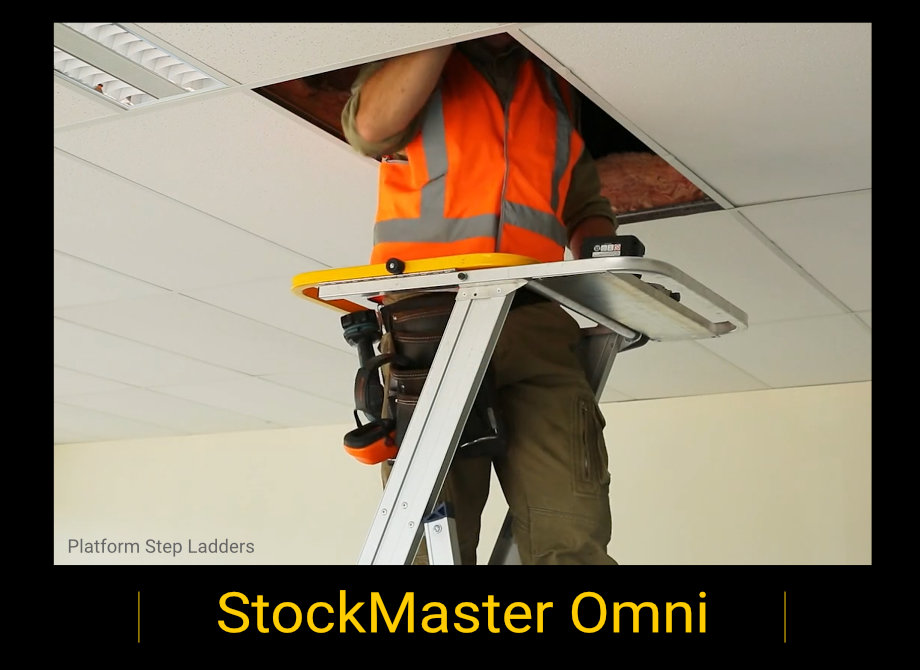
Consider how often the user needs to move and whether the work is concentrated in one spot or spread across an area. A stepladder may be a practical option for stationary work; a podium-style design or mobile platform may suit tasks where the user benefits from a different working area or frequent repositioning. Names and designs vary, so confirm the supplier’s description and intended application for each model.
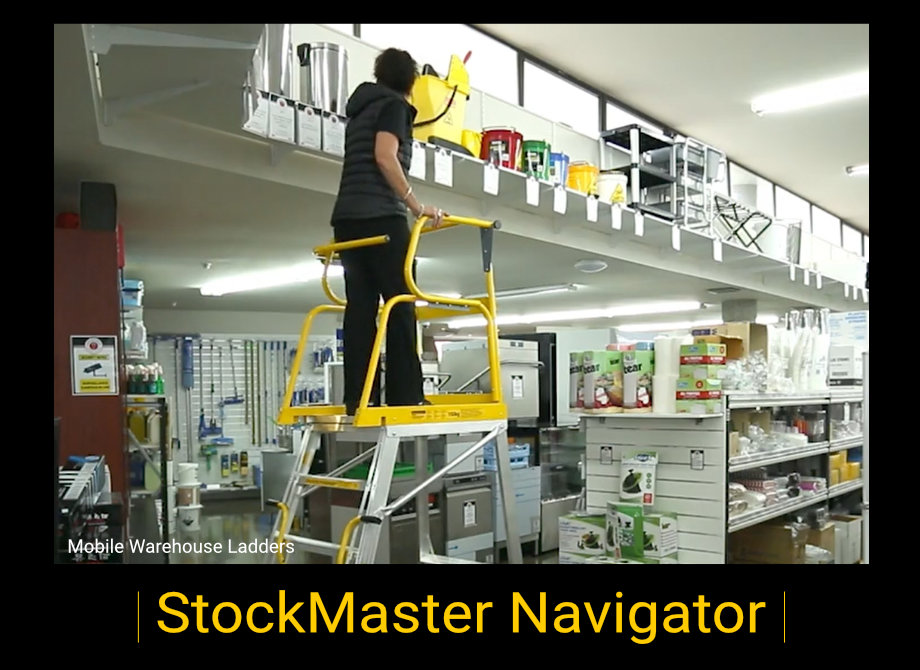
For warehouse work, the StockMaster Navigator is described as a mobile warehouse platform ladder for order picking, shelf stocking and inventory access. Its documented design includes a single control for moving and steering, with four feet returning to the ground when released; check its specifications and operating information against your site before deciding if it fits.
Decide whether guardrails and a self-closing gate are needed
The need for guardrails or a gate depends on the task, ladder design and workplace requirements. Ask which safety features are included as standard and which are optional, and whether an accessory is compatible with the specific model. Features should be assessed as part of the equipment system, not assumed from the product category.
If several workers will use the ladder, make sure the chosen arrangement is clear and practical for them to operate. Confirm how rails, gates or other components work and follow the manufacturer’s instructions for use.
Compare platform size, access steps and handholds
Check whether the platform provides the space needed for the user’s stance and the task, while remaining suitable for the available floor area. Look at step spacing, access direction and the position of handholds. These practical details influence how people get on and off and how the ladder fits into a busy work zone.
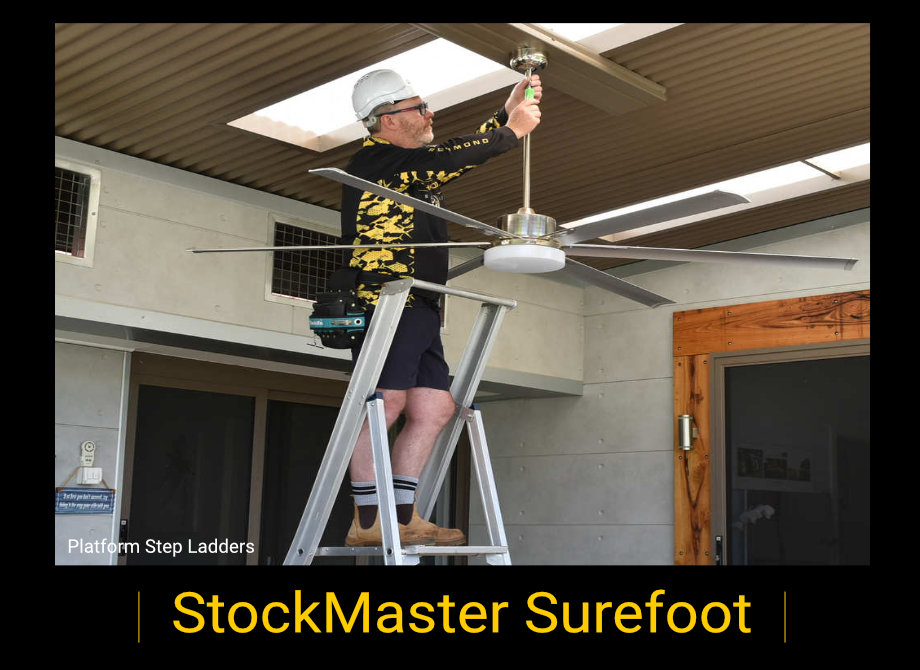
The StockMaster SureFoot trade platform ladder is documented as having a large anti-slip platform, wide box-section steps and high-grip feet. Its stated load rating is 150 kg, and its product information says it meets Australian Standard AS 1892.1:2018 and European EN 131 requirements. Confirm that those documented details align with the work and requirements at your site.
Check whether wheels, stabilisers or folding features suit the site
Wheels can make repositioning easier, but the right arrangement depends on the work surface, route and operating method. Check how the ladder is intended to move and what keeps it in position during use. Stabilisers and folding features also need to suit the space, storage plan and the manufacturer’s instructions.
For a mobile work platform option, the StockMaster Tracker is documented for indoor and outdoor use, with large wheels for sealed and unsealed surfaces and one control for steering and braking. The product information also describes TrackerPro options with adjustable safety rails and platform gates. Check the exact configuration and site conditions before selecting it.
Choose materials and construction
Materials affect weight, handling and suitability for the environment, but no single material is the right choice for every workplace. Compare the complete ladder and its intended use rather than relying on a broad assumption about one frame type. Ask suppliers to identify the model’s construction and provide product documentation.
Compare aluminium and fibreglass frames
Aluminium and fibreglass are common frame options, but their suitability depends on your task and worksite requirements. If electrical hazards are present, seek confirmation about the particular model’s suitability and follow your organisation’s controls; do not treat the material name alone as proof of compliance. For other applications, consider handling, storage and the conditions in which the ladder will be used.
Request the relevant product details for the exact model under consideration. That gives your procurement and safety teams a sound basis for comparing options without relying on generalisations.
Look for secure joints, bracing and non-slip feet
Inspect how the ladder is assembled and whether the joints and bracing appear suited to regular workplace use. Check that feet are appropriate for the surfaces where the ladder will stand and that the product information describes the relevant contact surfaces. Ask how the ladder should be checked before use and what signs of damage require it to be removed from service.
Assess corrosion resistance for harsh environments
If the ladder will be exposed to moisture, cleaning products, dust or other harsh conditions, ask the supplier how the chosen model is suited to that environment. Confirm the care and inspection guidance rather than assuming that a particular finish or material will prevent deterioration. Your selection should reflect both the exposure and the maintenance routine you can sustain.
Balance portability with durability
A ladder that is easy to move can be useful across a large site, while frequent handling can make construction and storage important considerations. Compare the full unit, including any accessories, and consider who will move it and how often. A product that is manageable for one user in one area may not suit a different route or work pattern.
Check safety, standards and workplace requirements
Safety and compliance should be confirmed for the specific ladder, application and workplace. Ask for current product documentation and make sure it applies to the model and configuration you intend to purchase. Treat supplier statements as information to verify against your organisation’s requirements, not as a substitute for a workplace assessment.
Request documentation for applicable Australian standards
Ask the supplier to identify any applicable Australian standards and provide documentation for the exact product. Check the document’s scope, model reference and date, and clarify any claim that is unclear. If a product also refers to an overseas standard, consider it separately from Australian workplace requirements.
Keep the relevant documents with your purchasing and safety records. This makes it easier to confirm that the equipment selected matches the stated requirements and the workplace’s intended use.
Confirm the ladder’s duty rating and safe working load
Check the product’s stated duty rating and safe working load in its documentation. Make sure you understand what the rating covers and compare it with the total load that will be on the ladder during the task. Do not infer a capacity from appearance or from a similar model.
Review guardrails, locking mechanisms and slip-resistant surfaces
Ask how the guardrails, gates, locks and other moving parts are intended to operate. Check the manufacturer’s instructions for setup and use, and confirm that the selected configuration includes the features you need. Slip-resistant surfaces should also be inspected and maintained according to the product guidance.
Check relevant state or territory WHS requirements
Work health and safety obligations can depend on your state or territory and the circumstances of the work. Consult your organisation’s WHS adviser and relevant local guidance, and assess the task before choosing equipment. A supplier can provide product information, but your workplace remains responsible for ensuring the equipment is appropriate for the job and used correctly.
For additional guidance, refer to Safe Work Australia’s Model Code of Practice: Managing the risk of falls at workplaces
Confirm capacity, dimensions and storage needs
A ladder can appear suitable in a product listing and still be a poor fit for the site. Check capacity, footprint, access routes and storage together, especially if the ladder will serve different teams or areas. Accurate measurements help you compare options and avoid surprises at delivery.
Add the user’s weight, tools and materials when checking capacity
Include the user and anything carried or placed on the ladder when checking the stated capacity. Use the exact model documentation and ask the supplier if you are unsure how its rating applies. Leave no assumption untested, particularly where the task involves materials as well as hand tools.
Measure the ladder’s footprint and access route
Measure the area where the ladder will be set up and the route it must pass through to get there. Account for aisle width, doorways, obstacles and nearby work activity. A mobile ladder may need extra room to turn or position, so compare the route and operating space, not just the base dimensions.
Check folded dimensions against storage space and transport
If the ladder folds, confirm its dimensions in both operating and folded positions. Check that it fits the intended storage area and any vehicle or delivery route used on site. Consider who will handle it and where it will be kept between tasks; storage should protect the equipment and keep it accessible when needed.
Consider whether one ladder can safely serve multiple tasks
A single ladder may seem efficient, but tasks can differ in height, floor conditions, mobility and capacity requirements. Compare the work locations before deciding to standardise on one model. The following questions can help expose differences that might otherwise be missed:
- Does each task need the same platform height and access direction?
- Are the floor surfaces and available clearances similar?
- Will the same tools and materials be carried on each task?
- Can the ladder be moved and stored safely between locations?
If the answers vary, check whether one model is suitable for all of them or whether separate equipment is more appropriate. Confirm each application against the product documentation and your workplace assessment.
Compare suppliers and the long-term cost
A purchase decision includes more than the ladder’s initial price. Compare suppliers on the information and support they provide, as well as whether the chosen model matches your worksite brief. Keep the comparison specific: quotes are most useful when they cover equivalent equipment and requirements.
Ask about warranties, replacement parts and servicing
Ask what the warranty covers, how replacement parts can be obtained and whether servicing support is available. Confirm any relevant conditions in writing and find out what product information the supplier recommends keeping. This helps you plan for ongoing use without assuming that support is identical across products.
Check delivery, assembly and returns before ordering
Before placing an order, confirm delivery arrangements, any assembly requirements and the supplier’s returns process. Check whether the delivery route and access conditions at your site are suitable for the equipment. Clarifying these details early can prevent avoidable delays after purchase.
Compare total cost rather than purchase price alone
Compare like-for-like quotes and include costs that affect ownership over time. A work brief makes it easier to judge whether suppliers are quoting on the same basis. Consider factors such as:
- The exact ladder model and included features.
- Delivery and any assembly requirements.
- Replacement parts and available servicing support.
- Storage, movement and inspection needs at your site.
Then review the differences against the task and workplace requirements rather than choosing on price alone. A ladder selection guide can also help you compare task frequency, load, access routes and storage needs when preparing a purchase brief.
Plan routine inspections and safe storage
Set out who will inspect the ladder, how inspection findings will be recorded and where the equipment will be stored. Follow the manufacturer’s guidance and your workplace procedures, and remove damaged equipment from use in line with those procedures. A clear routine helps keep the ladder’s condition visible throughout its working life.
Conclusion
To buy industrial platform ladders Australia-wide with confidence, begin with the task and worksite, then check the model’s design, capacity, dimensions and documentation. Compare suppliers on a like-for-like basis and choose equipment that fits both the work and your organisation’s requirements.
Frequently Asked Questions
What should you check before buying an industrial platform ladder?
Define the task, required platform height, user and load, floor conditions, available space and frequency of use. Then verify the specific model’s capacity, dimensions, documentation and intended application.
How do you choose the right platform height?
Start with the position the user needs to reach and the working posture required. Ask the supplier to clarify platform height and any working-height information, then confirm the choice against the task and product documentation.
Is a mobile platform ladder suitable for every warehouse?
Not necessarily. Suitability depends on aisle dimensions, floor surfaces, routes, turning space and how the ladder is operated. Assess the actual site and check the model’s instructions before choosing a mobile design.
What is the difference between a platform ladder and a stepladder?
A platform ladder provides a standing platform, while stepladders vary in their design and features. Compare the specific models’ access, working area and intended applications rather than relying on category names alone.
How should you check a ladder’s capacity?
Use the stated rating for the exact model and include the user, tools and materials in the load assessment. Ask the supplier for clarification if you are unsure how the rating applies to your task.
What documents should you request from a ladder supplier?
Request product specifications, applicable standards information, operating and inspection instructions, and details of warranty and support. Confirm that the documents relate to the exact model and configuration being considered.
How often should platform ladders be inspected?
Follow the manufacturer’s instructions and your workplace inspection procedures. The routine should identify who is responsible, how findings are recorded and what action is taken if damage or a fault is found.